Have you ever stopped to think about how the spaces we teach and work in can foster a sense of belonging for some people while feeling alienating to others?
The opening of the Sloane Robinson Building (SRB) has prompted me to think more deeply about inclusive learning spaces. The new building offers impressive teaching environments, equipped with state-of-the-art technology, flexible furniture arranged around hexagonal tables, and spacious communal areas. These features have been widely appreciated by students and staff, as reflected in a recent BILT survey exploring experiences of the new spaces.
One finding that emerged particularly strongly was that students feel the new teaching rooms support interaction and relationship building with their peers. In other words, students see these spaces as conducive to learning. This is encouraging at a time when students are increasingly weighing the benefits of attending in-person teaching against the time, energy and financial costs involved in getting to campus (Lowe et al., 2025).
However, while the enthusiasm for the SRB is clear, it raises an important question: do all students and staff experience these spaces in the same way?
Spaces Are Not Neutral
Research by Wong (2024) reminds us that spaces are not neutral. The same environment that makes one person feel comfortable and engaged may leave another feeling excluded, overwhelmed or out of place. Wong’s framework of spatial belonging offers a useful way of thinking about this through four interconnected dimensions: physical, digital, relational and structural.
If we want students to continue engaging with in-person learning, it is worth considering how each of these dimensions contributes to inclusion and belonging.
Physical Space
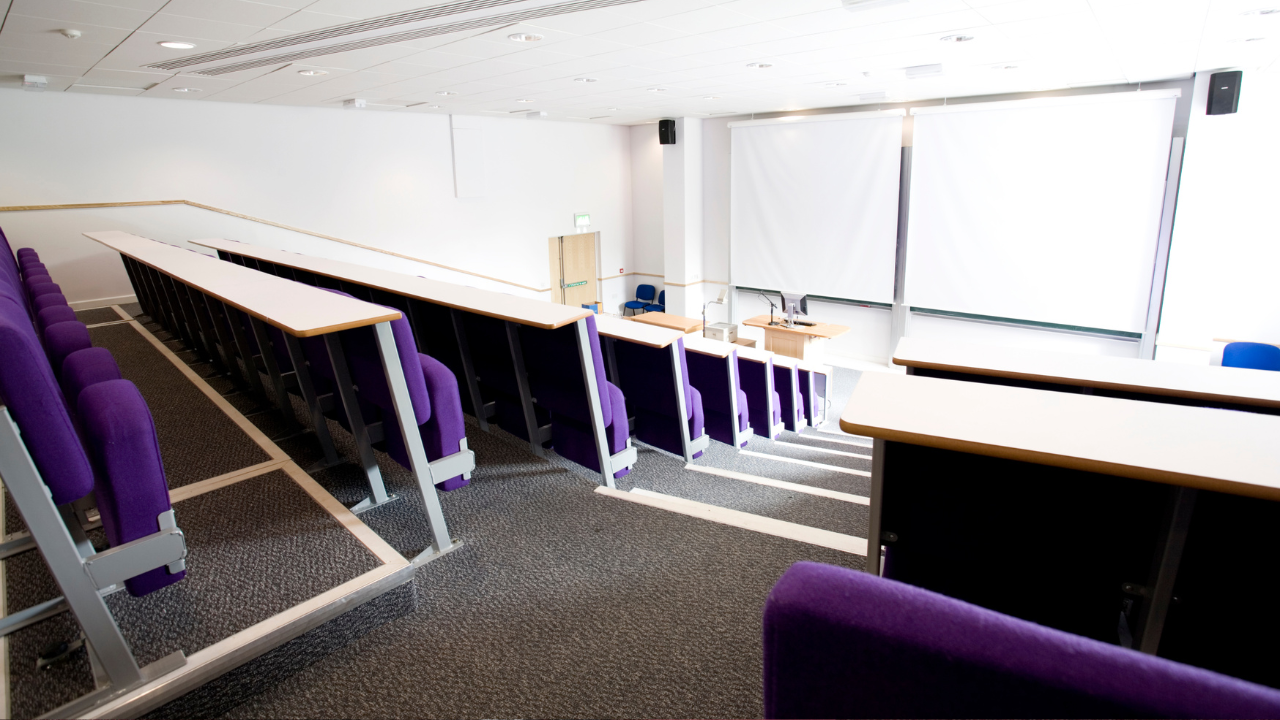
Physical spaces are the tangible environments in which learning takes place, from lecture theatres and seminar rooms to laboratories and informal study areas.
The SRB’s contemporary design can create a strong sense of excitement and possibility for many students. Yet not everyone experiences spaces in the same way. Some students may find busy, open-plan environments overstimulating or struggle to locate quieter areas for focused study.
Similarly, specialist environments such as laboratories can feel intimidating, particularly for students with limited prior exposure to them. Small actions, such as taking time to orient students to a space, explaining how it works, or discussing ways they can make themselves comfortable, can help students feel more confident and settled.
As educators, it is worth asking: how much time do we spend helping students navigate their physical learning environments?
Digital Space
Belonging extends beyond physical campuses into digital environments. For many students, platforms such as Blackboard Ultra are unfamiliar when they first arrive at university. Navigating digital systems can create unnecessary stress at a time when students are already managing multiple transitions.
Simple interventions, such as a welcome video, a brief tour of the virtual learning environment, or clear signposting to key resources, can help students feel more confident and supported from the outset.
Relational Space
Relational belonging is shaped through interactions with peers, educators and learning activities. A welcoming greeting at the start of a session may seem like a small gesture, but it signals that students are recognised and valued members of the learning community. Equally important is whether students can connect with the content they are studying and understand its relevance to their lives and future aspirations.
Lowe et al. (2025) argue that students increasingly seek a clear reason to attend teaching in person. Simply reading from slides offers little that cannot be replicated through a recording. Meaningful interaction, active participation and opportunities to learn with and from others provide a much stronger rationale for attendance.
Students studying in the SRB have highlighted the opportunities the teaching spaces create for peer interaction. However, collaborative learning does not happen automatically. It requires thoughtful design, clear expectations and appropriate scaffolding to ensure all students feel able to contribute.
Structural Space
Underlying all of these dimensions is the structural context in which learning takes place. Institutional policies, procedures and wider societal structures can create barriers that affect students’ sense of belonging and access to support. While these barriers are not always visible, they can have a significant impact on students’ experiences.
Being mindful of the diverse circumstances our students bring with them is an important part of creating more inclusive learning environments.
Creating Spaces for Belonging
Wong’s (2024) framework encourages us to think about inclusion and belonging from a broader perspective. While thoughtfully designed buildings can support engagement and interaction, belonging is not created by architecture alone. It emerges through the interplay of physical environments, digital systems, relationships and institutional structures.
As educators, we may not always be able to redesign the spaces in which we teach, but we can influence how students experience them. By paying attention to the physical, digital, relational and structural dimensions of belonging, we can help create learning environments where more students feel comfortable participating, connecting and succeeding.
Perhaps the most important question is not whether a space is inclusive, but inclusive for whom?
Please share your thoughts on how you are making learning spaces more inclusive.
References
Lowe, T., Naughton, C., Struetzel, T., Adams, R., Walker, J., Kynaston, P. and Mackey, C., 2025. Why are students not attending in-person classes post-Covid-19? An explorative study in student engagement. Active Learning in Higher Education, p.14697874251366213.
S7E5 – Zachery Spire on Space, Place and Belonging – L&T Chat Show | Podcast on Spotify
Wong, B., 2024. Exploring the spatial belonging of students in higher education. Studies in Higher Education, 49(3), pp.546-558.



Leave a Reply