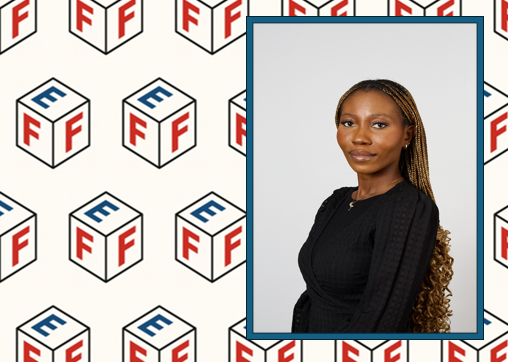
Robynne Grant-Jepps is a BILT Student Fellow and PhD researcher in Security, Conflict, and Human Rights. She is working on the theme ‘Designed for All Assessment Activities’ this year.
This year, I am excited to introduce the new Student Fellow theme ‘Designed for All Assessment Activities’ here at BILT. Inclusion has long been an important element of strategy and planning in UK Higher Education, usually conceptualised within the nest of ‘Diversity, Equality, Inclusion’ (DEI). Recently, the DEI team at the University of Bristol introduced a ‘Roadmap to Intentional Inclusion’ (n.d.), arguing that “diversity is a fact […] inclusion is a choice”. This is reflective of a broader shift towards the use of ‘intentional inclusion’ as terminology to better convey inclusion as a process, something which the development of this new theme at BILT reflects. This blog post considers this new framework for thinking about inclusion within the context of assessment practices in Higher Education.
Why is inclusion an important element of assessment strategy in the first place?
A broader uptake of Higher Education (HE) in recent decades has facilitated a shift in the social demography of UK universities, manifesting as an ever-growing diversity within the student body. This diversification presents us with an institutional responsibility to create an environment that is inclusive for all (Worthington, 2008). Here, inclusion could be conceptualised both as an emotional sense of belonging, and as the practical aspects of participation (Blessinger et al., 2018: 3-5). Likewise, assessments are a critical element of teaching and learning in Higher Education. They motivate learning, measure competence, and are important when students enter the labour market. Tai et al (2023: 404) envisage a shift from diversity to inclusion as facilitating a “more proactive approach to participation and success”.
Research has indicated that where student experiences with assessment and feedback contribute to a sense of exclusion (primarily through alienation and loss of self-esteem), there is potential for long-lasting damage (Mann, 2001; Mountford-Zimdars et al., 2015; Sambell, 2016). Furthermore, evidence suggests that outcomes after university are often worse for those in marginalised groups, despite holding similar degrees (Mateos‑González and Wakeling, 2021; Tomaszewski et al., 2021). It begs to be seen, then, that “diversity work does not necessarily lead to inclusion” (Cyr, 2018: 26). As teaching and learning professionals, it is therefore important to design assessment and feedback systems in a way that promotes inclusion for all.
Okay, so how does the phrase ‘intentional inclusion’ contribute to our understanding here?
We often think of inclusivity in assessment as providing individual adjustments on an ad hoc basis. However, this approach is overly reactive, relies on treating students differently (the antithesis of inclusion!), and places the administrative burden on those already experiencing the toll of marginalisation or exclusion. Intentional inclusion involves embedding the principles of inclusion in the very fabric of an organisation; its operations, policies, and practices. When we shift our thinking to being intentional about inclusion, it becomes important to build inclusion into the top-level design of assessments rather than promote a system that favours individual ‘fixes’. The latter could be seen as a more proactive approach that “promote[s] the inclusion of marginalised students as fully accepted, agentic members of academic communities” (Nieminen, 2021: 1).
How might we put ‘intentional inclusivity’ into practice in this context?
When considering why we ought to consider inclusivity in assessment, Hanesworth (2019) points out: “Assessment in higher education is neither value-neutral nor culture-free: within its procedures, structures and systems it codifies cultural, disciplinary and individual norms, values and knowledge hierarchies”. As such, aspects of student experience such as assessment and feedback can serve to reinforce what Kovač and Vaala’s (2021: 1209) definition refers to as “evaluative social categorisation”: that is, the idealisation of a particular kind of student through assessment practices and, conversely, the alienation of others.
Intentional inclusion could look like many of the practices that you are already doing: providing transparent grading rubrics, using formative assessments to provide ‘low-risk’ learning opportunities for students, and considering the spread and timings of assessments at the course level. But critically, intentional inclusion ought to be conceptualised as a process, not a destination. Practitioner reflexivity, iterative feedback loops from the beneficiaries of assessment practices (namely, students), and ongoing critical engagement with what Intended Learning Outcomes need/ought to capture for student success are all important aspects of ensuring that assessment practices within Higher Education are intentionally inclusive.
Bibliography
Blessinger, Patrick, Hoffman, Jaimie, and Makhanya, Mandla (2018) ‘Introduction to Contexts for Diversity and Gender Identities in Higher Education’, in Jaimie Hoffman, Patrick Blessinger, and Mandla Makhanya (eds) Innovations in Higher Education Teaching and Learning, Melbourne: Emerald, pp. 1–12.
Cyr, Lauren (2018) ‘Literature Review: Interdisciplinary Findings on Diversity and Inclusion’, in SunHee Kim Gertz, Betsy Huang, and Lauren Cyr (eds) Diversity and Inclusion in Higher Education and Societal Contexts, Cham: Springer, pp. 17–34.
Diversity, Equality, and Inclusion Team, University of Bristol (no date) ‘Roadmap to Intentional Inclusion’, available online at https://www.bristol.ac.uk/inclusion/edi-guidance,-toolkits-&-framework/, accessed 29 November 2023.
Hanesworth, Pauline (2019) ‘Inclusive Assessment: Where Next?’, Advance HE, 24 January, available online at https://www.advance-he.ac.uk/news-and-views/inclusive-assessment-where-next, accessed 30 August 2023.
Kovač, Velibor Bobo, and Vaala, Birgit Lene (2021) ‘Educational inclusion and belonging: a conceptual analysis and implications for practice’, International Journal of Inclusive Education, 25 (10): 1205–1219.
Mann, Sarah J. (2001) ‘Alternative perspectives on the student experience: Alienation and engagement’, Studies in Higher Education, 26 (1): 7–19
Mountford-Zimdars, Anna, Sabri, Duna, Moore, Joanne, Sanders, John, Jones, Steven, and Higham, Louise (2015) Causes of Differences in Student Outcomes, London: Higher Education Funding Council for England (HEFCE).
Nieminen, Juuso Henrik (2022) ‘Assessment for Inclusion: rethinking inclusive assessment in higher education’, Teaching in Higher Education, 1–19.
Sambell, Kay (2016) ‘Assessment and feedback in higher education: Considerable room for improvement?’, Student Engagement in Higher Education, 1 (1): 1–18
Tai, Joanna Hong-Meng, Dollinger, Mollie, Ajjawi, Rola, Jorre De St Jorre, Trina, Krattli, Shannon, McCarthy, Danni, and Prezioso, Daniella (2023b) ‘Designing assessment for inclusion: an exploration of diverse students’ assessment experiences’, Assessment & Evaluation in Higher Education, 48 (3): 403–417.
Worthington, Roger L. (2008) ‘Measurement and assessment in campus climate research: A scientific imperative’, Journal of Diversity in Higher Education, 1 (4): 201–203.



Leave a Reply