The Practice
Our project focused on advancing the decolonisation of the Biological Sciences curriculum at the University of Bristol by continuing our work from the previous academic year, with a focus on the perspectives and experiences of international and POC students.
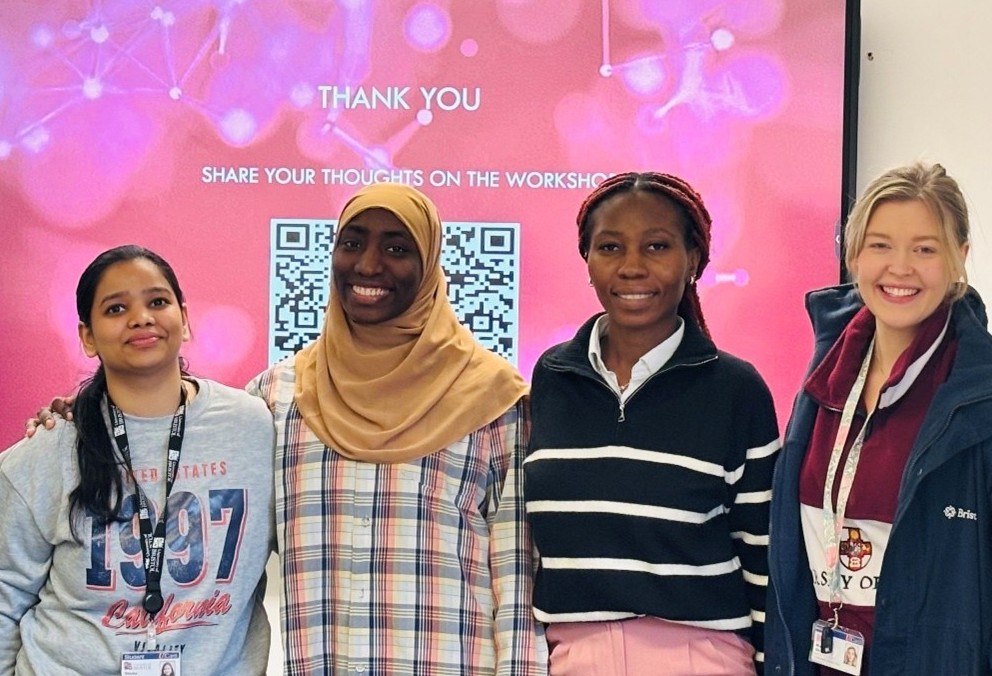
The funding allowed us to work with two student partners, Keisha Santoso and Jessie Yeung, who have undertaken various tasks to advance our school’s decolonisation efforts.
Findings
A significant achievement was the successful inclusion of our two student partners in the second iteration of the “Decolonising Biological Science Research” workshop. This workshop was integrated into the first-year unit, Current Topics in Biology, and provided a platform for students to discuss positionality and explore ways to enhance inclusion in research. The cohort welcomed their participation, and their expertise and status as peers supported fruitful discussions (~80 student participants with 4.07/5 satisfaction and 4.27/5 for relevance to the students).
Keisha and Jessie also produced a “Demographic of Researchers Report”, highlighting the extent of diversity (or lack thereof) in the representation of researchers, especially regarding gender, ethnicity, and global north/south origins, featured in our curriculum (focused on Year 2 Biology). The findings from this report will inform future efforts to diversify the curriculum.
They also facilitated a focus group for international students and students of colour, providing a much-needed space for these groups to share their experiences and perspectives on the support and representation they receive within the School. Findings and subsequent recommendations are captured in a report which we plan to present to relevant school committees. Implementations of (at least) some of these recommendations can have the potential to positively impact these groups and all our students by creating a more inclusive environment.
Finally, they also directly engaged with two unit directors and our student society to suggest and advocate for changes in a decolonising effort, which has received positive feedback from the relevant staff who are committed to implementing the suggested changes.
The Impact
The project’s impact is already visible in different spaces. The successful integration of student voices into the workshop and the subsequent reports have highlighted existing disparities and provided actionable recommendations for change.
The project has the potential to foster a more inclusive academic environment by addressing the experiences of international students and students of colour. Student partners’ engagement and advocacy efforts exemplify how collaboration between students and faculty can lead to meaningful progress in curriculum development. Ultimately, these efforts are expected to benefit all students, creating a richer and more diverse educational experience.
Next Steps
Our next steps as a school are to implement the changes suggested in both the demographics report and the report following the focus groups with international students and students of colour.
In subsequent years, we will aim to repeat the Student Decolonisation Partner project with new students, focusing on other key areas related to decolonising the School of Biological Sciences.
Contact
Dave Lawson (david.lawson@bristol.ac.uk)
Celine Petitjean (celine.petitjean@bristol.ac.uk)


Leave a Reply