BILT Team
Question number one, how are you feeling about being one of the keynote speakers at the BILT 2026 conference, and what will you be speaking about?
Jo Hartland
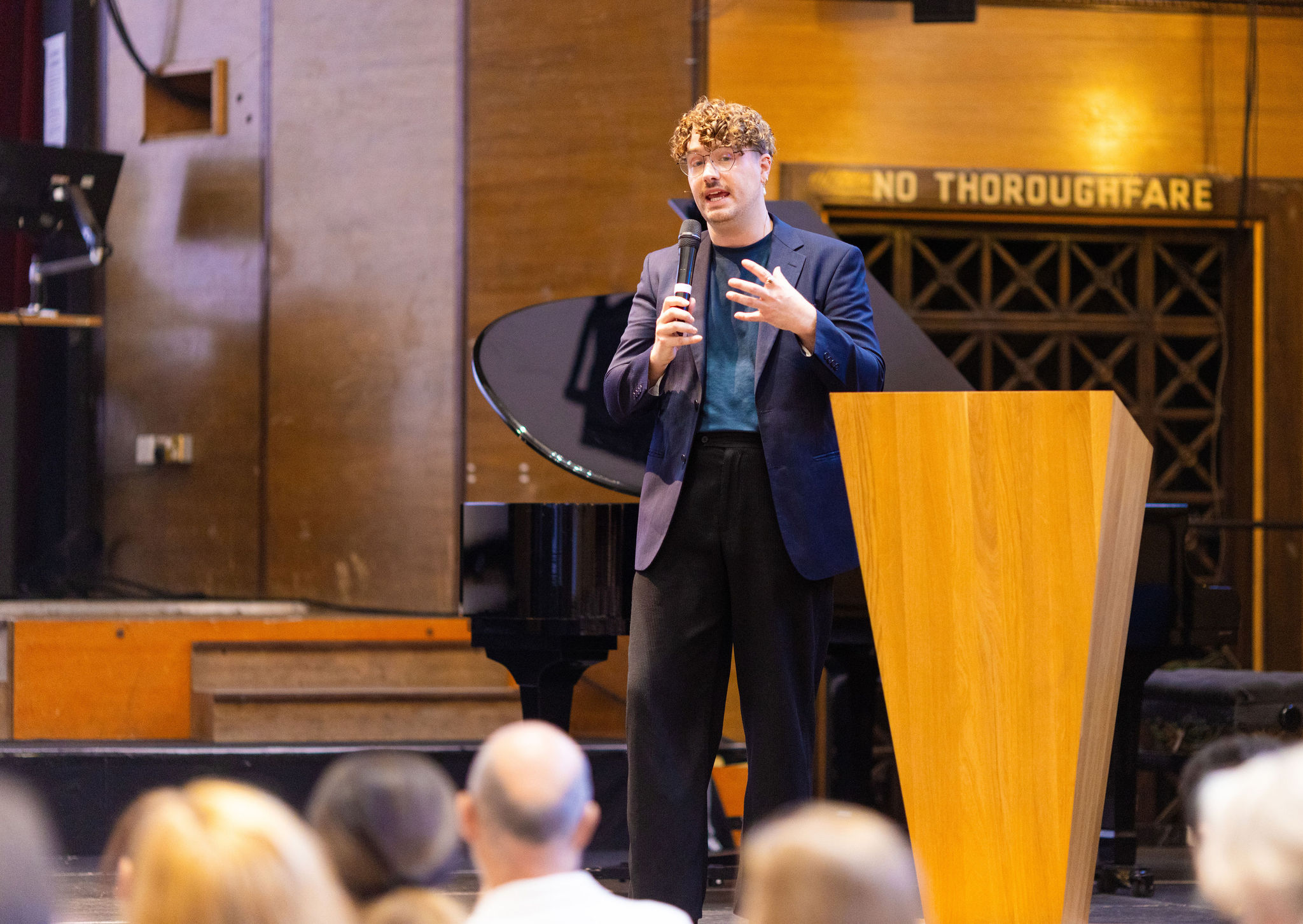
I’m a bit intimidated, but it’s lovely to be asked to do this. I am quite excited and I have a lot of things I want to talk about, and I want to share that I think are important.
There are two huge inspirations for this keynote. The first is a critical perspective paper on disability justice in medical education that I have been writing with my colleague Dr Nazanin Rassa. The other is teaching I was asked to develop for a leadership course for the university on inclusive assessment in the time of AI, where I have been speaking a lot about ‘what are the values that underpin our education system?’ and ‘what do our assessments tell us about who is valued and what kinds of knowledge are valued?’
For instance, do we value productivity over keeping someone safe? In medicine, that’s a huge topic as we can sometimes use time as a competence measure. For instance, can you complete this clinical task within this time frame? And often that is more to do with someone being productive than it is them being competent.
That means that disabled learners are instantly going to be held to a different standard because the spaces they work in aren’t designed for them to be “productive” in. So, you might say you have one core assessment but depending on a student’s body or mind you’ve got multiple different assessments, as different students are having to fit themselves into one rigid model that is based on values that we’ve maybe not even critically thought about.
My title is ‘Challenging Exclusion, a Critical Conversation about Inclusions and its Limitations’ and it starts with a quote from bell hooks, from ‘Teaching to Transgress’, which was bought for me for my colleague Naz about 18 months ago. I had read extracts of it, but being a gift, I have actually committed myself to properly digging them down and reading it and making notes in it, which is always a fun thing to do. It has really helped affirm some of the things I’d already been thinking about in terms of what do I want education to achieve and what does it mean to use education as a tool of freedom, as opposed to a tool of social domination.
When you think about it, how much of education, especially before a student reaches higher education, is teaching them not to question? How much of it is teaching them to just obey? How much of it is reinforcing certain kinds of behaviours that are often gendered, that are often racialised, that are often seen through a lens of ‘this is just how you should be’? And how many neurodiverse learners and how many queer learners and how many people come out the end of that feeling like they don’t belong? And that’s because education can be a powerful way to dominate a population.
On a personal level, one of the reasons I came out as genderqueer (similar to non-binary) later in life is because I left medicine and I wasn’t constrained by some of the ways in which my education taught me I had to present in order to be accepted and be acceptable as a professional.
I think education can be a really powerful way that we can free people’s minds, that we can create critical and engaged thinkers and learners. But I also think it’s a way that you can control people. And I think if we’re not clear about what the values are that we base our education systems on, especially now that education is so commodified, now that, you know, apparently we’re relying on students paying more and more in order for universities to exist, if we’re not really clear about the role of education, I think that’s really dangerous.
BILT Team
Question two: What sort of learning and teaching has influenced your practise and what are you most intrigued by?
Jo Hartland
One of the things that I’m really privileged to do is that a huge amount of my teaching that I deliver is done in partnership with community, especially the communities who are affected by the issues that I teach on [health inequalities]. I’m especially lucky that I get to work closely with communities and build, with them, content that they want to teach. We work together so that this is mapped to an external regulating curriculum, to make sure that we’re achieving particular goals. In doing this I get to have these really lovely relationships with these people who are amazing speakers themselves, but also those for whom this is really new and it’s quite scary; I get to help them develop those skills to be able to speak out and, in as much as I’m able to, work in a really trauma-informed way. Recognising how scary it can be to talk on some of these topics and what that means to keep people safe, both students and educators in an education space, and how we still hold space for challenging conversations.
I don’t really like the word ‘debate’ because I think there’s certain things I don’t think we should debate and I think debate is a polarising term. But a lot of my work is thinking about and learning from communities about how we have challenging conversations about issues that are very politicized, are really relevant to health and how we keep everyone safe in that conversation. And so I’m really lucky that I do that and I’ve been able to start exploring other models being used outside of academia; there’s a group who are doing social change within communities down in the Torbay area, who are looking at deep democracy work down there.
So I’m really interested in thinking about whether we, as educators acting with humility, can recognise that maybe the practice of ‘debate this and debate that’ or ‘wouldn’t it be fun if you were taking on the position of something that you disagreed with’ is deeply academic and out of touch? What if we actually listen to communities who do this work of change and we learn from them in respectful ways? And so that’s why I’m really interested in learning about how does change happen in difficult spaces within communities, and what would it look like for us with humility to listen to them and to echo their work in ways that make sure that they are recognised so that any of that learning is not a one sided extraction of these skills.
BILT Team
Questions Three: what do you think your characteristics are as an academic member of staff? What would we experience if we were in a session with you?
Jo Hartland
I think and I hope that I am compassionate. One of the things that I think is deeply lost in higher education and I try really hard to bring to what I teach and how I teach is compassion, whether that’s for the students, for myself, or for other people in the room. I just think compassion is incredibly important to us feeling safe and having trust. And I think so often we talk about this need to create safe spaces and yet we don’t talk about, okay, so how are we going to be compassionate towards each other? How are we going to be respectful? That is all part of being safe.
I think I’m probably someone who…how do I put this? I do find that possibly because of my experience of being neurodiverse, but also probably because of my queerness and some of the spaces that I am in socially, I don’t necessarily fit the model of what people expect an academic to be like. So, I try not to be too much, but I’ve done lectures in the Wills Memorial Building that many people would think, wow, that’s not a topic I would expect to be discussed here or language that I would expect to hear in this building. And I think that’s because I’m a very human member of staff. For a very long time I tried to mask who I was and pretend I was this sort of slightly different person, and, with time and confidence, I’ve grown to realise that I am very me. So, I think I’m very authentic when I teach and I think a lot of people like that; some people don’t, and that’s also very, very fair. But I try to be very authentic with how I handle situations and teaching.
BILT Team
Okay, question #4. Have you tried anything new in your practice recently? How did it go?
Jo Hartland
I guess it’s not new, but maybe the way in which I approach it has been new, which has been thinking about freedom of speech, thinking about who I am as an individual, and the fact that some of my identities and the identities of my community are very politicised. And yet I teach on topics related to that.
That has been something that I’ve been thinking a lot about, because how do I do that in a way that feels safe, not only for the students and for the people in the room, but also for me?
How do I say to people, you can 100% ask me questions, but I want those questions to be done respectfully and compassionately and if I don’t feel like I want to continue a conversation, how do I move it on without feeling like I might be accused of trying to shut down discourse, or not welcoming people’s views? I think many people who come from backgrounds like my own are probably feeling that anxiety at the moment.
How do we tread this ground that feels like it’s not always safe, despite the fact it is maybe sold as a safety issue, right? As in, ‘we’re doing this to keep you all safe’. So one of the things that I have started doing with that transparency work of telling people who I am in the room is also being really honest about that and has been an invitation to people to ask questions and to engage with me, but to do so with compassion. With an awareness that things that we say in academic spaces that maybe feel like debate for you, will feel a lot like hate if it’s someone’s rights that you’re talking about.
So, I’ve been trying to navigate: how do you bring that in? That’s when I spoke earlier about thinking about things like deep democracy work and that idea of pulling together really difficult and conflicting spaces with that acknowledgement that we want people to grow and learn in a whole community. One of the things that I’ve found difficult is being able to do that in a way that feels safe, and so I’ve been kind of looking to other spaces, other ways of doing that and I’m not sure yet how we navigate all that.
BILT Team
Final question: why should we be excited about the future of learning and teaching in higher education?
Jo Hartland
My really honest answer to that is: I think that for a lot of people, it’s actually really hard to be excited right now. I think for many of us, with changes to the ways that we work, anxieties about our jobs, anxieties about the future of higher learning. Especially the way that perhaps we see higher education beginning to serve certain political and economic agendas, more than perhaps serving knowledge and serving people. I think that makes it hard to be excited.
What I do think we should be excited about is the opportunity to reconceptualise a little bit what higher learning and higher education is meant to be. The thing that is exciting me at the moment is thinking about how do I break down some of these walls that mean, that in medicine for instance, that communities don’t get access to knowledge about their bodies.
I’ve been successful in getting a small grant to look at some of how we might deliver teaching at some of the micro-campuses that we have. And I think exploring community-based education that is integrated into the city and into the communities of this city, where we’re not simply extracting knowledge from them in terms of research and not giving it back to them, but thinking about how actually the university has a reciprocal civic duty to this city and to the people who are underserved by all of the services in the city with really stark social inequalities, I think for me it’s really exciting for us to think about that, inspiring us to work with those communities and change our ways of thinking and doing things for society not just industry.
So, it is hard right now to be excited, but I think that there is the opportunity for excitement if we are brave enough to speak honestly about the need to change the way that higher education works and who it serves.


Leave a Reply