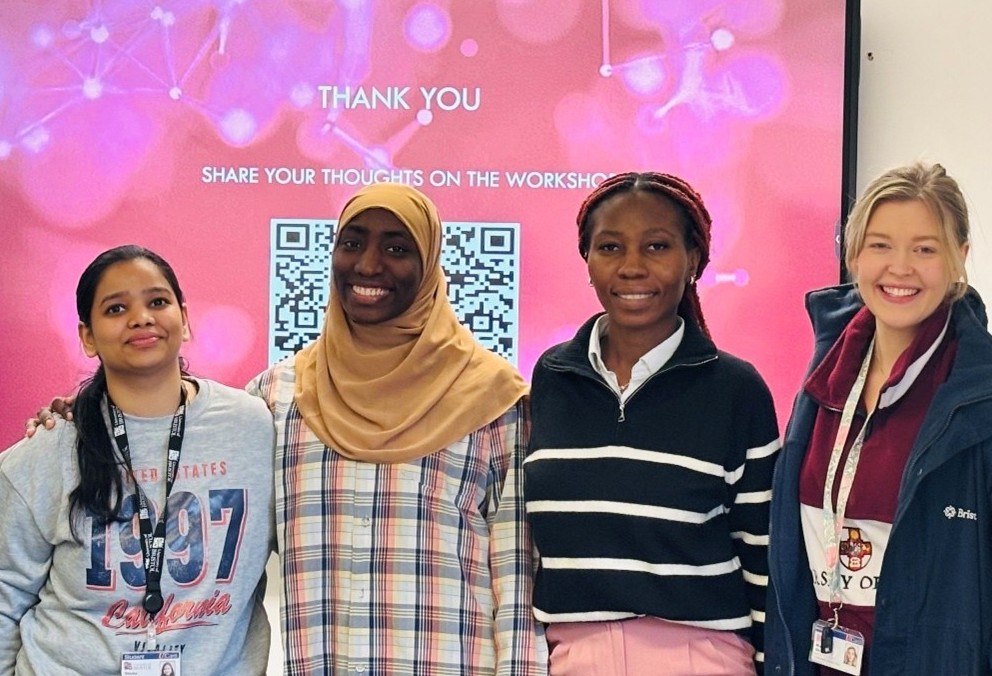
On 13th December we held a hackathon with 10 students with the aim to find out more about their experiences of teaching and learning as international students. Eight of the students were from countries outside the UK and two were home students that had spent a year on the Study Abroad programme. Despite the fact the participants were from a range of different backgrounds, study levels and subjects, there were three themes that kept coming up throughout the day:
- Wellbeing
- Engagement
- Community
I’m going to explore each of these themes in a little more detail over the following three blog posts, and finish with a collaborative piece with a colleague who is currently researching the experiences of international students’ teaching and learning from the academics’ perspective. As this month we are focussing on wellbeing in BILT, we’ll start with this theme, and highlight some of the useful tips students suggested as part of their final presentations.
Wellbeing underpins all other aspects of University life
We’ve been running hackathons in BILT for the last five years covering topics from assessment methods to digital learning. We’ve worked with dozens of students on these hackathons and one thing we can confidently say is that wellbeing is at the core of every issue we discuss. Wellbeing provides the base upon which everything else sits and we’ve heard students tell us many times that if their wellbeing isn’t good, nothing else can be a success.
In this hackathon, we heard similar sentiments. We started the day talking about their ‘expectations versus reality’ of being an international students, and we found that terms like ‘neglected’, ‘lonely’ and ‘stress’ came up – however there were many positive comments, with students noting they were happy that Bristol felt like a safe city, had (for the vast majority) been welcoming and there had been lots of events put on by the University to help students become more familiar with their surroundings and peers.
Helps, hindrances and language
The discussions around wellbeing can be formed into two categories – wellbeing in the classroom and wellbeing out of the classroom, and I’m going to look a little more at what helped and what hindered students in each of these situations.
But before I go onto this, I just want to briefly mention language. I attended a ‘Show, Tell and Talk’ event the week before the hackathon and found the majority of conversations that I heard were about language skills and how they affected experiences and outcomes for international students. I was really surprised, then, that when we came to do the hackathon there was very little mention of language. The main reason, I believe, behind this is that the students who volunteered their time to take part in the hackathon would be students who are already relatively confident in their English, and so do not find the language as much of an issue (not to say that it didn’t come up at all, it just did not dominate conversation). We’ll look more at this in the final blog where I collaborate with my colleague, Catriona Johnson, who is researching this same area.
Wellbeing in the classroom – competition, hierarchy and boundaries
Students in our study had mixed experiences when it came to wellbeing in the classroom. A lot of the discussion was around how well and able they felt they could engage, both with peers and with the lecturer, which we will look at more detail in a future post. I’m going to try and cover some of the more strictly-wellbeing aspects that we covered during the hackathon.
Competitiveness was something that came up throughout the day – two students said they experience this less than in their home countries but the rest of the students felt there was a slightly competitive nature and a reluctance to share grades with each other. This led to a lack of trust and sense of suspicion – both having negative impacts on wellbeing. It is important to highlight here that this is not something that is international student specific- it is something we have heard before.

Teaching idea: In the final presentations, students mentioned that having more transparency around grades – perhaps showing a bell-curve of the grades across the cohort, would be helpful, so students could see where they stand without having to ask awkward questions.
Students also discussed a ‘two-tier’ system, and – separately – a hierarchy in the classroom. The ‘two-tier’ system referred to a separation between ‘home’ and ‘international’ students – this played out in terms of difficulties in understanding cultural differences, different sense of humour and not feeling like they could participate in small talk. They also talked about a hierarchy between academics and students – this is something we have heard students share in previous hackathons. The hierarchy they described was a perception that academics are unapproachable and that they don’t want to engage.
Teaching idea: In the final presentation, one group suggested that ‘icebreakers’ both between students and with the lecturer, where everyone shares a little about their backgrounds, would be a great way to help build relationships and create a better sense of togetherness, which would have a positive impact on wellbeing.
Students also mentioned that their wellbeing is affected by other’s attitudes in the classroom – lateness and excessive use of mobile phones are viewed negatively, as well as coming unprepared to the session and therefore hindering others’ progress.

Teaching idea: Setting class ‘rules’ or a charter as a group would be a great way to bond to students at the beginning and create a shared sense of respect while agreeing boundaries.
Wellbeing outside the classroom – administrative issues and support networks
Although most of the comments made in the hackathon were positive about the city of Bristol, that it was a safe city and that they felt welcome, some did share upsetting stories of unpleasant comments being made from the public.
Issues around visa restrictions were also a major factor in negatively impacting wellbeing – deadlines and difficulty in finding the right person to speak to caused students to worry about whether they would be able to stay and can be hugely distracting from their studies. One student anecdotally shared that they had to change their flight three times due to hold-ups with paperwork being processed.
Students shared that friends outside their course were a great support network and that they motivated them. They had all made friends – though some found it more difficult than others – and that taking part in University events helped. However, they noted that that there was a fine line between jokes and being derogatory and that they had been upset by what ‘friends’ deemed to be funny with regard to language differences. They also struggled to make small talk and did not understand a lot of cultural references.
With regard to learning outside the classroom, students were positive about the use of office/ drop-in hours and how they could be of huge benefit, especially when they did not feel confident to speak in front of the class.
In the next post we will look at community – mainly the concept of learning community – and it’s importance to wellbeing. In the post following this we will look at engagement, what ‘engagement’ means to the students we worked with and how it impacts on their experience.
We’d love to hear more about your experience – either as an international student or as someone who teaches international students – in the comments.



Leave a Reply