The Practice
Effectiveness of Case-based learning (CBL) is routinely assessed through measures such as student competence and professional socialisation (Moon & Chang, 2024), students’ satisfaction and level of learning (Haley et al., 2020) and effectiveness of faculty feedback (Mowchun & Davila, 2022). At Bristol Veterinary School, large-group CBL was previously researched as an approach to integrating basic with clinical sciences in an active learning environment (Crowther & Baillie, 2016); in our newer curricula, we have embedded both small- and large-group CBL formats.
Opportunities for collaborative learning, reasoning and decision making within the CBL-led curriculum are expected to have implications for students’ definition of who they are and what they (are expected to) do i.e. their professional identity. Whilst both small- and large-group CBL sessions are well established in our veterinary sciences curricula, we do not currently understand how (and whether) implementation of CBL-led curriculum impacts the students’ professional identity development in early years of their professional training.
A well-formed professional identity helps students’ transition to professional work through developing a meaningful professional self-concept. As such, it is important for the educators to consider if the curricula are supporting this objective (Reissner & Armitage-Chan, 2024).
Through this project, we sought to unpack conceptions of professional identity held by BVSc students in CBL-led curricula. The data were collected through a qualitative study involving focus group discussions with second-year students from the five-year BVSc programme (BVSc 2) and the Accelerated Graduate Entry Programme (AGEP 2); both cohorts have had experience of small group CBL. Eight students from each cohort participated in two separate focus group meetings. The meetings were conducted by a graduate researcher and lasted for 90 minutes each. Thematic analysis (Braun & Clarke, 2006) was used to generate preliminary codes, following which initial themes were derived.
Findings
The findings are organised in three themes i.e. motivations to join the programme, conceptions of professional identity held by the students and how it was informed by their experiences of CBL.
The students held intrinsic and extrinsic motivators for joining the programme. While both cohorts had altruistic motives and compassion for animals bringing them to the programme, BVSc 2 students seemed to be guided more by ideals and morals, whereas AGEP2 students appeared motivated more by their future goals. Possibility of diverse career pathways, familial and social influences, positive reputation of the veterinary profession and global recognition of the BVS programmes were among the extrinsic motivators for joining the programme.
Students’ understanding of what it takes to be a veterinary surgeon showed appreciation of surgical and clinical reasoning skills as well as professional skills i.e. effective communication with the clients and financial management skills. They identified empathy, honesty, patience, teamwork, and the ability to admit when you don’t know something as essential to the identity of a veterinary surgeon. They recognised the importance of emotional work associated with ethical decision-making, euthanasia, and the financial constraints that clients often face. There was a nuanced appreciation of resilience that is expected of a vet as they navigate mental health concerns, work-life balance, uncertainty about employment and public image of and violence against vets. CBL contributed meaningfully to their developing sense of professional identity, particularly towards developing skills in teamwork, clinical reasoning and searching for evidence.
The Impact
The project provided an opportunity to the students to reflect on their motivations, experiences and future goals in a safe space, and to co-construct their conceptions of professional identity. Many students wrote back to say that they were happy to be able to contribute to research, to reflect on their journey at the vet school and that they found the discussion very interesting.
The project impacted people development through further training of the research assistant (a PGR). They gained experience in research participant communications, independent running of focus groups, data analysis and report writing. As the PI, it was my first project at Bristol and its implementation significantly contributed to the development of my financial management skills.
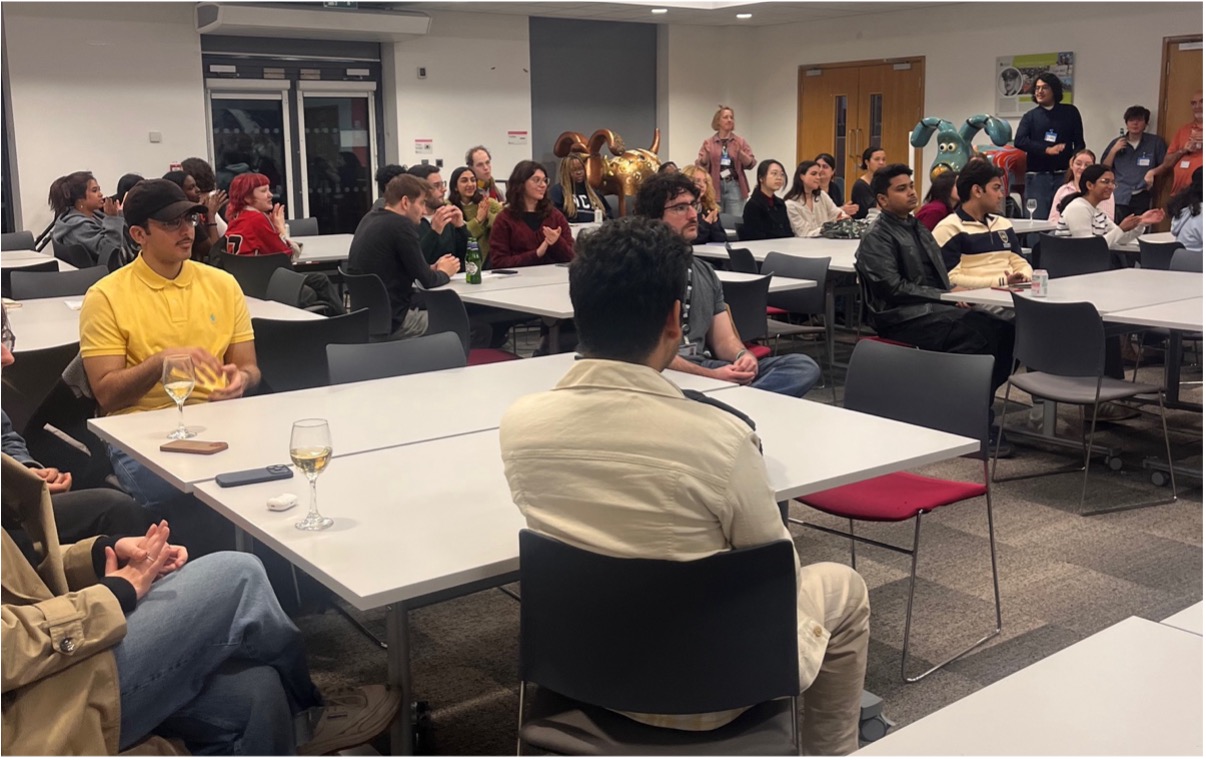
We presented the findings of the project at a BILT Show and Tell event, and will be presenting them at our VetEd research community’s away day in November. We expect that sharing of the findings with VetEd research colleagues will contribute to ongoing curriculum development, identifying ways in which we can support students to explicitly consider the development of their professional identity through CBL.
Next Steps
- Communicate the findings to the research participants
- Review the findings to identify themes that are relevant to design and delivery of the programme
- Present the findings to the VetEd research community at Bristol and the VetEd Conference next year
Contact
Hafsa Zaneb (hafsa.zaneb@bristol.ac.uk)
Authors:
Hafsa Zaneb, Sheena Warman, Emma Love and Julie Dickson



Leave a Reply