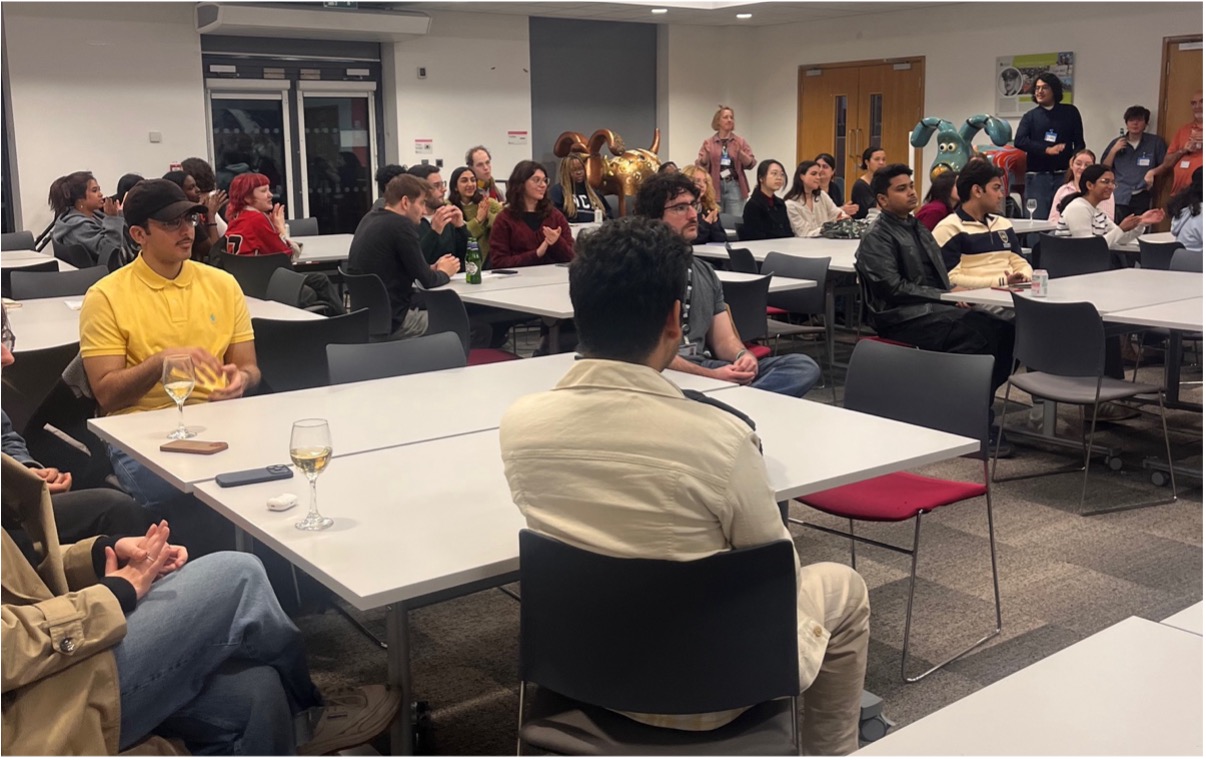
It’s just over 2 months since we launched the Bristol Skills Profile and its My Skills platform to academic and professional services staff. As we look to launch My Skills to students, this time has given me a chance to reflect on the event. So, in this first of two blog posts I’d like to share some of my reflections on the staff and student perspectives we heard from and how they link to some of the ideas that underpin the Bristol Skills Profile. Then in the next blog we’ll think about how the Bristol Skills Profile addresses an employer perspective and what this might mean for our teaching practice.
At the launch Nicole Antionette, Undergraduate Education Officer, gave us a student’s perspective on skills development. She talked about why skills matter for students and how the Bristol Skills Profile can help them to reflect on, understand and articulate their university experience. What came across in her presentation was the importance that skills development plays for many students in defining their time at university and helping them to pursue their passions.
Nicole’s presentation illustrated how far we have come since the 1997 Dearing Report first recommended that Higher Education should help students develop a set of key skills desired by employers – communication skills, ICT skills, numeracy and lifelong learning. Nowadays, we are not thinking about skills in this relatively transactional way but in ways that enable our students to grow as individuals and begin to explore their potential (not simply meet the needs of a modern workforce). And that if we can help students grow in this way, it will be of a richer benefit to society.

This is why we designed the Bristol Skills Profile using Barnett and Coates’ (2004) model of Knowing, Acting and Being (What will I learn? What will I be able to do? What will I become?) so that we can think about students’ skills development in a more profound and impactful way than Dearing’s recommendations. In fact, we are no longer talking about skills as Dearing perceived them – as things that people can do well like write a correctly formatted letter on a word processor or get their point across in a meeting. For Barnett and Coates ‘skills in themselves are bankrupt without a will to put them to good use (quite apart from good judgement to use them in due measure and with some degree of sensitivity to context)’ (p127). They are talking not just about what students might be able to do, but how what students do intersects with what they have learnt and perhaps more fundamentally who they are. And so, the Bristol Skills Profile and the My Skills platform prompts students to reflect upon not just how well they ‘communicate confidently and appropriately in a range of settings’ but also to reflect on their values, what motivates them, and what it means to act with integrity.
In the presentation from Anna Seddon, Professor of Physics and Doctoral Training Entities Director, we also saw this engagement with something more than just a traditional sense of skills. Anna told us about the ways she has embedded skills development in her teaching and the role this plays in her inter-disciplinary approach to learning. Anna talked about how the Bristol Skills Profile gives her a language she can use to talk about the ways her students develop and how it helps her students recognise the breadth and richness of their learning experience, while speaking to wider interdisciplinary themes that are often already part of her teaching, such as sustainability, innovation and decolonisation.
Anna’s use of the skills profile helps her students to take greater ownership of their learning – to navigate that intersection between what they are learning and doing, and what they are becoming. What Barnett and Coates note as ‘learning of any value has to be the students’ own learning. (p115).
In what ways might you able be able to use the Bristol Skills Profile to help your students surface the skills and knowledge they are developing in your sessions and take more responsibility for their learning and personal development?
References:
Barnett, R. and Coates, K. (2004). Engaging the Curriculum in Higher Education. Maidenhead. McGraw-Hill.
Dearing, R. (1997). Higher Education in the Learning Society: Report of the National Committee of Inquiry into Higher Education. London: HMSO.



Leave a Reply